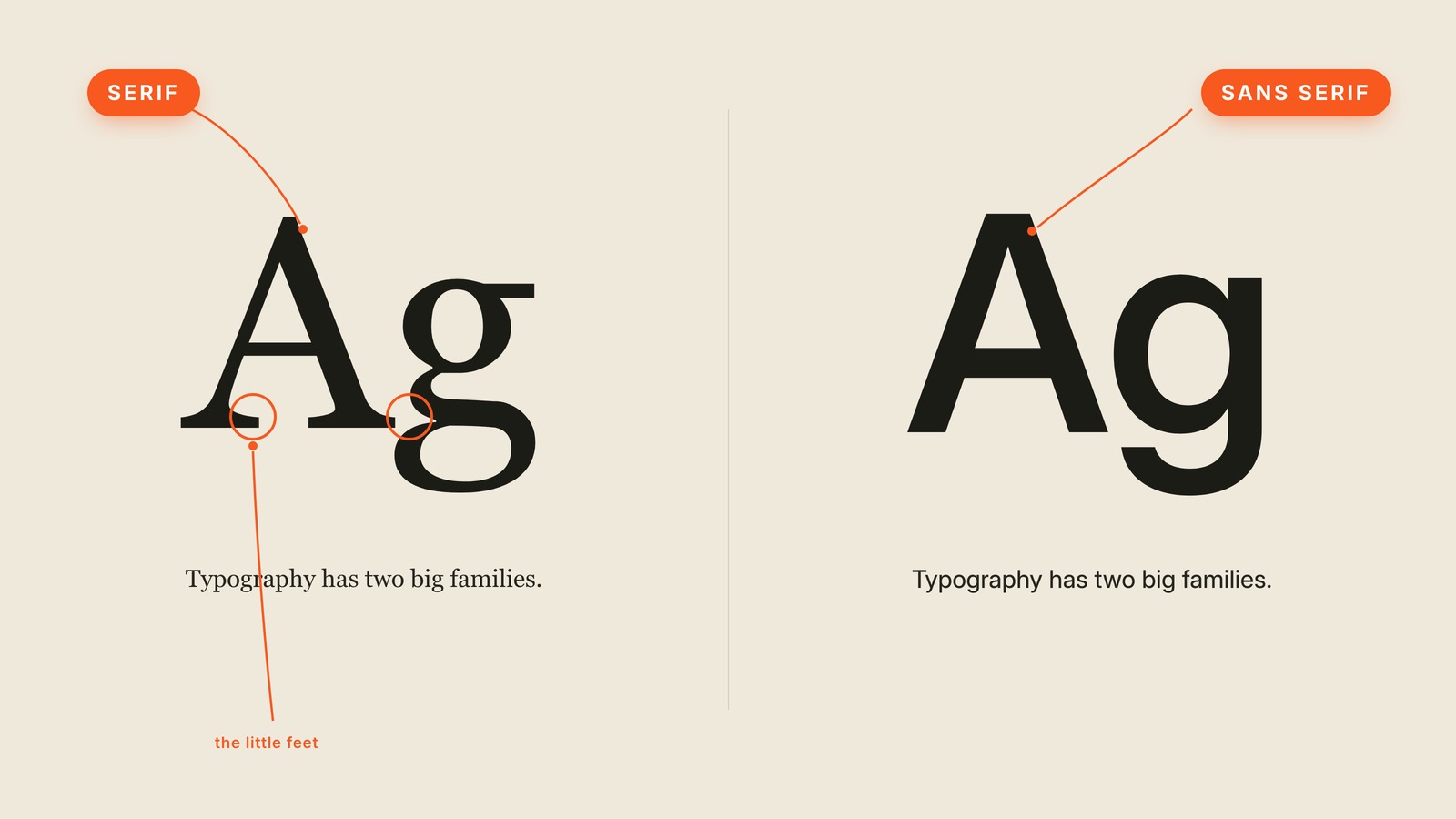
Fig. 47 / Serif & Sans Serif
Visual Design Vocabulary
Serif & Sans Serif
EXPLAINED SIMPLY:Serifs are the small feet at the ends of a letter's strokes: typefaces that have them are serif, and typefaces without them are sans serif, sans being French for without.
Serifs are the small feet at the ends of a letter's strokes: typefaces that have them are serif, and typefaces without them are sans serif, sans being French for without. That one detail splits nearly every font you've ever seen into two big families.
Set the same two letters side by side and it stops being abstract. The serif Ag stands on little feet, with small flares finishing every stroke. The sans serif Ag ends each stroke clean, as if the feet were filed off. Once someone circles the little feet for you, you can sort any font on sight. In the picture even the g's disagree: the serif one is ornate, the sans one is plain.
The two families carry different accents. Serif reads traditional and bookish, which is why novels and newspapers live there. Sans serif reads modern and neutral, which is why app interfaces and road signs live there. These are defaults, not laws, and designers break them on purpose, but the instinct runs deep enough that swapping one family for the other changes how the exact same sentence feels.
Screens picked a side early. Low-resolution displays mangled the delicate feet, so interfaces went sans serif and mostly stayed, which is why your phone speaks sans serif nearly everywhere. Now that screens are sharp, the old rule of serif for print and sans for screens has relaxed, and serifs are creeping back into products that want more character.
You'll also hear it hyphenated as sans-serif, or shortened to sans. Like kerning, this is vocabulary that buys precision: "let's try a serif for the headline" is a specific, testable request, where "can the font feel more premium" sends everyone guessing. When you want type to feel different, first ask which family you're in.