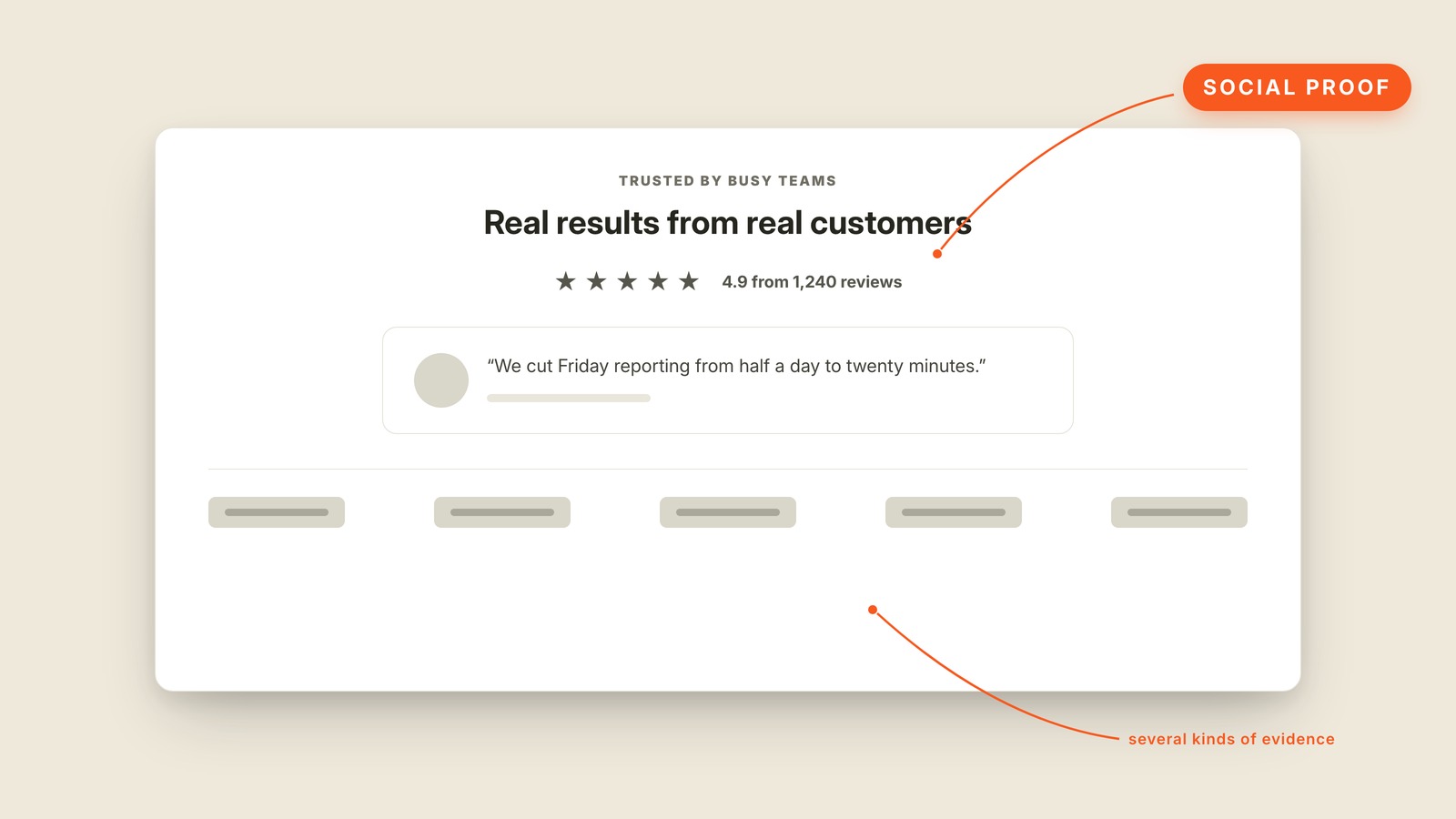
Fig. 38 / Social Proof
Web UI Patterns
Social Proof
EXPLAINED SIMPLY:Other people's evidence doing the persuading.
Social proof is the part of a page that borrows other people's trust through testimonials, ratings, customer counts, reviews, or familiar logos.
A company asking you to trust itself is not much evidence. A customer explaining what happened after trying it is harder to dismiss. Social proof answers "does this work for people like me?" with receipts from people who tried it.
Different proof handles different doubts. A specific testimonial explains an outcome. A large customer count reduces the fear of being first. A logo wall shows recognizable companies, while a star rating compresses many opinions into one quick signal.
You'll hear testimonials, reviews section, star ratings, trust badges, customer logos, and wall of love. The evidence has to be real. Invented urgency, cherry-picked numbers without context, and anonymous praise that could describe any product create suspicion instead of trust.
Specific proof beats a vague compliment. "Saved six hours every Friday" carries more weight than "Amazing product." If the page asks visitors to trust it, show who already did and what happened next.